Spring Updates
March 2026

Volume 13 includes updates from the SWCC Rafting crew, our Pipelines vs Promises report, Bioremediation: Coldfire project updates & Sik-E-Dakh Mushroom Cultivation course, the 2026 Energy Forum, and “Rooted Reflections: A Botanist’s Journal” - a creative writing piece by our very own Allie Golt!
SWCC RAFTING 🛶
It’s been a busy and exciting start to 2026 for our rafting program.
On January 23, 2026, SWCC staff, Keyento, Drew, and Shawntei, headed to Coast Mountain College in Smithers for an information session with local high school students. We had a great time connecting with everyone and sharing what our program is all about. There was a lot of interest and some fantastic conversations about opportunities on the water.
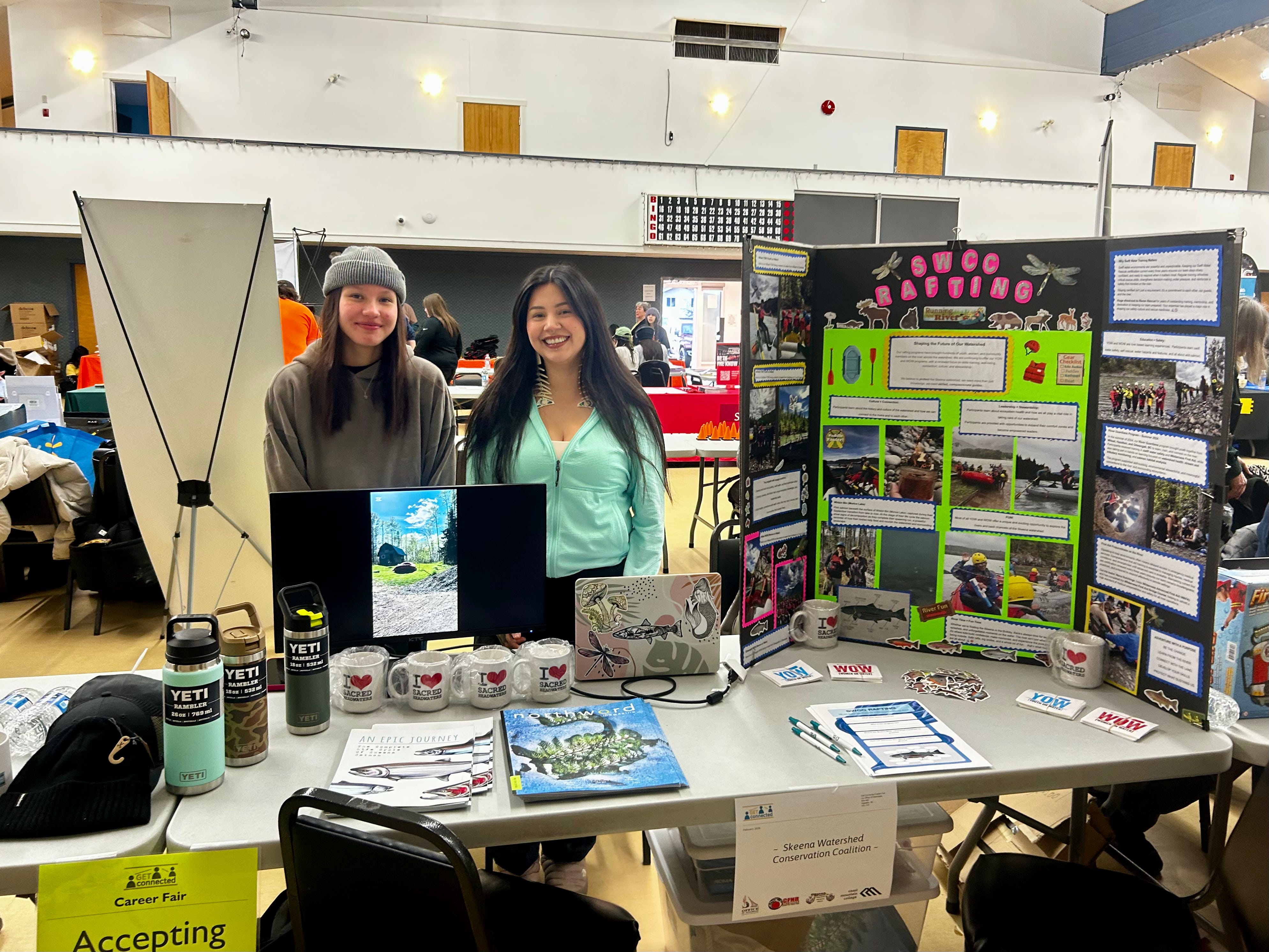
On February 12, we attended the “Get Connected” Career Fair at the Gitanmaax Hall. The event was a big success! We met many new faces, made valuable connections, and had some fun with exciting door prizes at our booth. It was great to see so much enthusiasm from the community.
Behind the scenes, we’re hard at work preparing for the upcoming season. Our YOW (Youth on Water) program is set to launch in early April, and we can’t wait to get back on the river.
We also have some exciting additions planned for this season–stay tuned for more updates!
PRGT Updates
Pipelines vs Promises Report: find report here.
This report shares the findings of a research project conducted in summer 2025 by the Skeena Watershed Conservation Coalition, with support from Research for the Front Lines. The report demonstrates how drastically the economic, legal, regulatory, and policy conditions have changed since major liquified natural gas (LNG) projects and pipelines were first on the table in 2012.
LNG Canada has been flaring up to 15 times more gas than expected, documents reveal: An issue with the Kitimat, BC, facility’s flaring equipment has resulted in LNG Canada burning significantly more gas—and it could take three years to fix.
-The Narwhal
Indigenous leaders from the Wet’suwet’en and Gitxsan Nations (Chief Na’Moks and Gwii Lok Im Gibuu (Jesse Stoeppler)) in Canada joined with Murujuga traditional custodian Raelene Cooper at Woodside headquarters in Perth on Tuesday morning to discuss their mutual fight to protect their homelands from the destruction and desecration of Woodside’s transnational gas expansion plans.
BIOREMEDIATION 🍄🟫
Our Director of Program Execution travelled to California in January to take part in the Fire Grand Challenge final summit. This was an opportunity to present on coldfire to a larger audience, including funders, foresters, and local governments. After spending most of 2025 implementing coldfire field testing, we are focusing on scaling, training, sharing information, and building our networks in order to broaden coldfire’s implementation and application for waste wood mitigation and wildfire resilience.
Sik-E-Dakh Mushroom Cultivation course
We had Alexis, one of the founders from Smithereens Mushroom, as our teacher for this course. Some of the topics we covered were: Basic Mushroom Grower Vocabulary, Liquid Culture, Inoculating Substrate, and Fruiting (triggering mushrooms to grow). This information gave the participants the basics needed before doing hands-on work such as prepping agar, grain spawn, and inoculating the grain spawn.


SKEENA ENERGY SOLUTIONS 💡
The 2026 Empowered Energy Solutions Forum is right around the corner! Join us from April 9-11 at the Sik-E-Dakh Community Hall.
The Forum will empower community members with the knowledge, experience, networks, and resources they need to make more informed decisions about their energy use. Building on baseline work from the previous years on energy use and emissions in the Upper Skeena, the Forum will offer demonstrations, presentations, and information on a variety of energy conservation and renewable energy technologies.
Check out our ongoing projects and initiatives at: upperskeenaenergysolutions.ca
THE LAX’YIP FIREKEEPERS 🔥
The Firekeepers southern tour was a success. A few members travelled down to Vancouver and Victoria to spread awareness about the ongoing resistance to the PRGT pipeline:
Watch the full video and highlights on our Substack (@laxyipfirekeepers)
Stay tuned for more community gatherings and relationship building in the north
Our team is growing. After one year of being together we have hired one employee and are working on hiring our second employee to help run our organization. We also held our first Annual General Meeting and shared with the community what we’ve been up to. Stay tuned for our community report on social media.
🐾 Wilp Aasosxw: Dog Sanctuary
Wilp Aasosxw is in need of some supplies! If you’re looking to support Teresa Brown and the puppies at the dog sanctuary, you can donate (wilpaasosxw@gmail.com), sign up as a volunteer (message Teresa on the Wilp Aasosxw Facebook page and list what skills you can contribute or if you’re interested in being a driver), or provide supplies (eg. wood shavings for the pups, firewood, groceries, dog food, etc.) Wilp Aasosxw is a busy place and always looking for more help! 🐾
Rooted Reflections: A Botanist’s Journal
By Allie Golt
April always feels like a quiet turning point, especially when the first native plant species begin to emerge from the thawing soil. After months of muted browns and grays, that first hint of green feels almost electric; a small but certain promise that the landscape is waking up.
These early native plants are more than just beautiful - they are foundational. They provide some of the first nectar and pollen sources for emerging pollinators like native bees and early butterflies. Their life cycles are closely tied to the rhythms of the land, unfolding in careful synchrony with temperature, soil moisture, and daylight.
Seeing the first native plant species push through the leaf litter in April feels intimate and grounding. It is a reminder that beneath winter’s stillness, life has been quietly preparing. The appearance of that first bloom marks not just the arrival of spring, but the resilience and continuity of the ecosystem itself. For this newsletter, I would like to reintroduce you to an old friend: Wild onion.
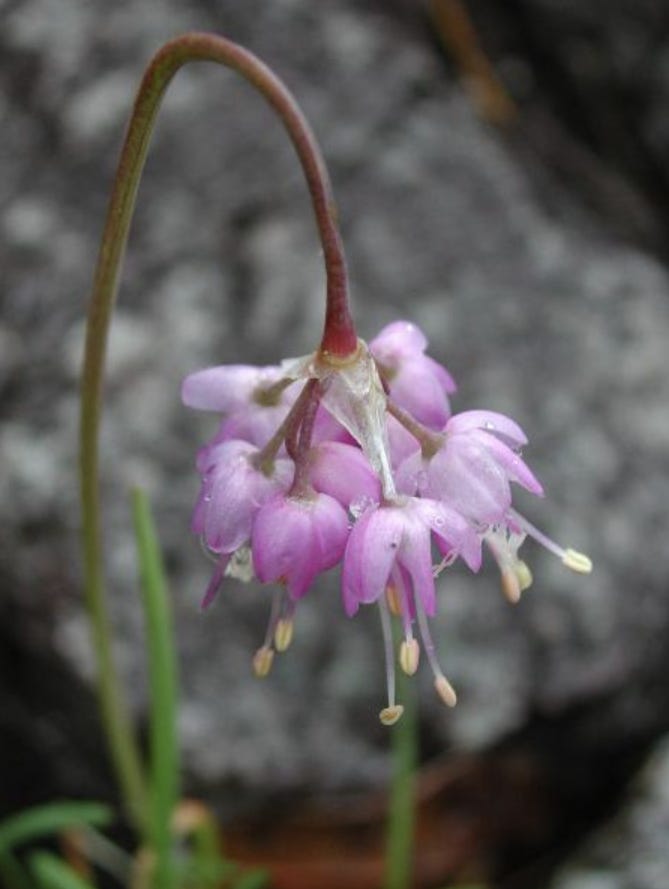
Wild onion (Nodding onion, Lady’s leek) - ts’anksa gaak
Wild onion is a spring favourite that is identifiable by its distinct, onion-scented bulbs and leaves. It is a perennial herb growing from a scaly membranous bulb and grass-like leaves. Wild onion has a long, flowering stem with multiple pink or white bell-shaped flowers. They can grow between 10 to 50 cm tall, and are often found in exposed grassy fields, rocky outcrops, and dry sandy soils at low elevations. Wild onion can easily be cultivated by transferring the bulb, along with 3 to 4 inches of its surrounding soil, into a full sun garden with well-draining and rich soil. It will need lots of water in the early stages of the transplant, but you do not want the soil to be soaking wet. Note that the best time to do this is either early spring before the flowering stem appears or in the fall.